Posts

Showing posts with the label Occlusion

Bite registration for occlusal splints

Image
When making an occlusal splint, we need to provide the lab with an upper and lower impression (digital or analogue) and a bite registration. One arch record is used to make the appliance, the opposing is used to gain the correct occlusion and the bite record is used to mount the models so that the occlusion can be adjusted. The most common bite record that I see taken by my colleagues is either a bite registration in maximum intercuspal position or no bite record at all. This can work out sometimes but from my perspective it is not an accurate bite for splint construction. Essentially, I see a splint as a removeable tool to reestablish the patient's occlusion at an open vertical dimension. When the patient wears a splint, their vertical dimension is opened, and the teeth should ideally contact evenly all around the splint and dynamic movements should be controlled as well. This is what we are aiming for with tooth-tooth occlusion as well. Therefore, the bite records for a splint sh...
Melker's occlusion 2: Variations in ideal occlusion

Class 1 occlusions are the ideal occlusions discussed in the textbooks but they aren't always present. In fact, the majority of people in the community will be class 2. The occlusal contacts represented as dots and lines in the diagram of the previous part is based on a class 1 occlusion. Class 2 and class 3 occlusions will show different relationships and achieving a class 1 occlusion post treatment is not always possible or desirable when considering the goals of the patient. It is important to know why we do what we do and why the goals of treatment is what they are so that we can bend the rules as needed. The main change with Class 2 and 3 occlusions is the anterior guidance component of the occlusion. distribution of occlusal contacts is possible in any occlusion as the reason why we aim to do this is to reduce the non axial loads through teeth when the muscles are at their highest force. The position of these contacts may change with different positions on the occlusal sur...

Tom Giblin's occlusion course day 2

 Writing in retrospect about the second day of the occlusion course in Mona Vale. Day 1 was more basic setting up for TMJ anatomy, and some occlusal concepts. We mounter our own models with the records taken in the course Day 2 was about occlusal concepts, some basic TMD concepts and parctical equilibration on the models.  I think it was a fairly good course, explained concepts that were alluded to in university and is probably the way they should have been taught the first time around. Tom explained things well and was very patient with my constant barrage of questions. I have a thick pad of notes that I wrote down in the course and hopefully will start to write them up as posts probably at the end of the year once I am done with primaries.

Occlusion course

 Day 1 of 2 over for Tom Giblin's Occlusion course in Mona Vale. It was a solid day which was hands on as compared to Michael Melker's lectures. The day was about 50% didactic learning and 50% practical learning how to take occlusal records (impressions, leaf gauge bite, protrusive bite, facebow) and mount the models in a semi adjustable articulator. Tom gave many tips on different subjects and I'll be peppering some blog posts of these random tidbits when I find time. This year has been quite interesting and I have found that I reached a stagnant state due to restrictions on dental practice and delay of dental courses but attending this course has been cathartic in a sense and I can feel some interest and passion in prosthodontics rising again. Looking forward to day two which sounds like it will delve a bit more into the theory of occlusion and how to use this knowledge practically.

Looking back on my thoughts part 2

http://dental-tidbits.blogspot.com/2014/03/composite-restorations.html 1. Putting a thick layer of flowable doesn't compromise the strength of the restoration due to poor retention form, it is due to the lower filler content. 2. The way you place the composite into the cavity matters as trying to force a large blob of composite into a small cavity will result in voids. Flowable composite can be placed at the base of a cavity and heated composite can be injected into this to minimise voids. You must place the composite precisely and deliberately to reduce shrinkage stress. 3. I stopped using bond on instruments many years ago. It helps to stop instruments sticking but acts as a weak plane in your restoration (lower filler content again) and will lead to staining of your restoration. To avoid material sticking ensure a clean instruments i.e no material cured onto it and you can clean it with alcohol. Gold coated instruments can be used as well. Don't manipulate your material t...

Wear facets give a massive amount of information

Wear facets between upper and lower teeth can be a telltale sign of how a patient functions. A few points. Wear facets on cuspal inclines can indicate posterior function in a non axial direction.  Linear wear facets (i.e elongated, not a single spot)  can indicate a slide from first contact in CR to MIP. Large wear facets only indicate wide broad contacts not heavy contacts Worn canines can indicate nocturnal bruxism. Be sure to get the patient to manipulate their jaw to match the wear facets up. Patient who contact in extreme laterotrusion almost inevitably sleep brux. This makes a lot of sens to the if you point it out and it can be a good point to convince them to seek more diagnostics Patients who still have mammelons are unlikely to brux on anterior teeth so either they are trapped in MIP and exhibit more of a clenching habit or the have an anterior open bite relationship.

Michael Melker's Occlusion in general practice course

I attended Mike's course in Sydney at the end of August and found it a decent set of lectures. Nothing ground breaking as I have explored a little bit into occlusion in the past but it definitely served  to clear up a few misconceptions I had and consolidate a few concepts I was unsure about. There will be recordings available through restoring excellence so I will probably purchase this when it becomes available and make a few posts on occlusion. The good thing about Mike's lectures and philosophies is that it combines multiple points of views from different occlusal schools into a predictable and workable treatment flow. Topics I will be blogging about are things like: splints: designs and uses: ideal occlusal contacts, how to check lab work before it is inserted, concepts of CR, the uses of leaf gauges, how to manage cases taking into account structure, engineering and aesthetics etc.

The protrusive bite

Image
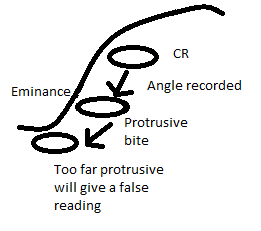
In complex rehabilitations cases, the more records that you collect often results in less adjustments on insert. Multiple unis prosthodontics removes the stability of the casts on mounting therefore the bite record is paramount. The protrusive bite becomes necessary to program the condylar angle on a semi adjustable articulator. One of many variations in human anatomy, the condylar angle has implications for guidance of the mandbible in protrusion and laterotrusion from CR. It represents the steepness of the articular eminence that the condyle translates down (Figure 1). Steep condylar angles will result in rapid disclusion of the dentition from CR whereas shallow condylar angles will have quite subtle disclusion. Figure 1: The angle of the articular eminance determines the path of the condyle as it translates forwards. The protrusive bite must not be taken too far forwards as it will give a false reading as the condyle translates over the cusp of the eminence. The protrusive bi...

Denture review

When a patient returns complaining of soreness to chew on dentures there are two broad possibilities: -Pain in the teeth supporting or retaining the denture can occur due to tight or ill fitting dentures. You will notice that it is difficult to insert the dentures without pressure. This can cause a similar condition to traumatic occlusion to the periodontium and the patient may complain of a tight feeling in their residual teeth -Pain to soft tissues due to denture contact: Always check the occlusion first! The patient may be contacting more firmly on one side causing uneven pressure and pain on the side they are chewing. They may also have an interference causing into lateral shift MIP. This will cause significant lateral force on the denture and will tend to cause pain on the lower denture that is on the lingual of one side and buccal of the contralateral side. Rather than adjusting the fitting surface of the denture, adjust the occlusion first til there are even bilateral contact...

Checking the occlusion post restoration

A few tips when checking the occlusion after a restoration. -Use articulating paper to check the contacts between the upper and lower teeth. Check open and close into MIP first. and after adjusting this to your satisfaction then check excursive contacts. Ask them to move their jaw all the way out to the side past cusp to cusp contact as you aren't sure how far along they may be parafunctioning. Often the bite is fine in normal function but a wide parafunctioner will crack a cusp at night. -If the tooth or restoration is fragile ensure that you tell them to bite gently first. Say "gently bite" not "bite gently" because by the time you say bite, some people will already be cracking down on your new filling. -After biting on the articulating paper, get them to bite and stay closed without it in. Check the contralateral tooth and the contact between the anterior teeth before adjusting the bite. This will give you an estimate on how much vertical you need to redu...

Fremitus

Fremitus as it relates to teeth is the movement observed on closure into the bite. Generally fremitus is observed in upper anterior teeth in traumatic occlusion due to their labial inclination. Lower incisors and posterior teeth tend to have a more vertical force from the opposing tooth whereas upper anteriors will be forced labially due to their contact on the palatal surface. Overerupted lower teeth, anterior RCP-MIP slide and bulky upper restorations can cause traumatic occlusion that can be exaggerated in chronic periodontitis. This force and muscular forces out of the neutral zone can cause anterior teeth to tip and diastemas to open. In case where the teeth are drifting forwards or are mobile, check for fremitus by placing your finger on the labial surface of the upper teeth and have the patient tap together into MIP then grind into excursive movements. Movement of your finger in MIP is a sure sign that there is a traumatic occlusion and this can be adjusted easily with a bur...

Full mouth rehabilitation tips Part 2

Recently I attended the part 2 course of Lincoln Harris' Full mouth rehabilitation live patient course. At the course, the dentists performed final tooth preparation and tooth impressions and retemporised. I took notes this time so there is plenty of information to share. I will split it into multiple posts about separate aspects of the patient treatment observed. These will occur over the next few weeks when I get time.

Tips from Full Mouth Rehabilitation course

I observed at Lincoln Harris' Full mouth rehabilitation course recently. I'll add small tips as they come to mind: A full mouth rehab is one of those things in dentistry that seems a lot more complicated than it is. In reality it can be broken down into smaller steps that if done well will lead to a successful and predictable outcome. Diagnosis is key to a rehabilitation. Discovering the cause of the breakdown as well as an accurate waxup is essential. After transferring a good waxup to the teeth, the resultant dentistry is just a bunch of crown and bridge work. Opening vertical dimension makes the patient more class 2. A class 3 patient will become less class 3 or class 1, and class 1 patient will become class 2 and a class 2 patient will worsen. When making a putty stent for transferring a waxup or for temporary crowns and bridges, take a putty stent of the waxed up model and reline it with light body impression material. Wax should stick well to a model. If it does...

Dawson's Occlusion: The design of the masticatory system

Image
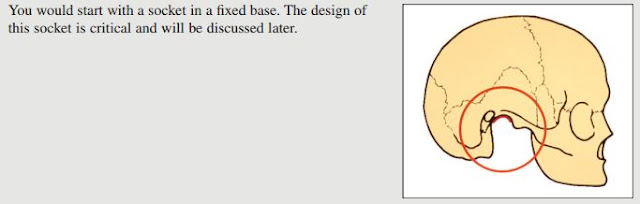
The goal for all occlusal therapy is a peaceful neuromusculature. If there is any loss of equilibrium, the muscle will try to regain equilibrium. In a war between teeth and muscle, the teeth will lose. This manifests as tooth wear, mobility, fracture and movement. It is essential to understand the role of the TMJs in occlusal design. As clinicians we must ensure that the TMJ in a reproducible and physiologic position (Centric relation) before the occlusion can be properly assessed and treated. Dawson explains the importance of occlusal harmony by taking a mechanical perspective on the design of the masticatory system. In the design of the teeth, it is important to note that the Jaws and TMJ developed before the occlusion therefore, the occlusion must fit into the preestablished maxillomandibular relationship.Correct phyisologic jaw position must therefore be determined before we can determine the correct alignment and occlusal relationship of the teeth. Th...

Dawson's Occlusion: Examples of occlusal disease

A working knowledge of occlusal principles not only improves the planning and execution of full mouth cases but also has an effect on everyday dentistry. It improves the outcomes of: -Patient comfort: with reduction in post operative sensitivity due to high spots and interferences. -Restoration longevity: Due to cracks,or fractures - Occlusal stability: With shifting of teeth, opening of contacts, misalignment -Treatment planning -Esthetics: as form follows function Signs and symptoms of occlusal disease Occlusal disease is defined as the deformation of disturbance of the function of any structures within the masticatory system that are in disequilibrium with a harmounious interrelationship between the TMJs, the masticatory musculature and occluding surfaces of the teeth. Examples include: -Attrition: commonly seen as wear on the lower incisors. there are two common causes of this. Posterior deflections causing an anterior shift from CR into MIP will cause the anterior teeth ...

Dawson's occlusion: Contributions to occlusal disease

Dental disease almost always results from a combination of factors rather than just one. The same insult can cause a plethora of different symptoms depending on the resistance of the host and the intensity of the insult. Treating symptoms/effects alone rarely is short sighted and rarely results in satisfactory outcomes. If the cause of the insult can be corrected, the effects usually spontaneously resolve. Repair may be needed after correction but the long term success is greatly enhanced as opposed to only treating the effects. Distinction must be made between contributing effects and causative factors of disease. Contributing factors are those that decrease host resistance or increase function or tension on the system whereas causative factors cause disease.  For example, in a healthy person with a perfect dentition, the introduction of a posterior deflective interference can cause a myriad of effects. 1. The tooth may become sensitive to hot or cold, or it may ache 2. The to...

Dawson's Occlusion: The concept of complete dentistry

Recently I have been reading a very good textbook: Functional occlusion from TMJ to smile design by Peter Dawson. I am attending a Dr. Michael Melker's Occlusion lecture in August and thought it would be good to do some prereading into the subject. Occlusion and the TMJ is one of many things that are notoriously poorly taught at dental school but are so important to everyday practice. We have to ensure that treatments we are performing on patients are doing benefit and not harm. We have to ensure that we are working towards stability of the orofacial complex and not instability and as patients are even less educated than we are on the subject, we have to take responsibility for our actions because their is a certain level of trust on their part that we should not discount. The concept that Dawson introduces in his textbook is that of "Complete dentistry". It is in essence what some would extend and call call "Holistic dentistry". He urges us to not focus on on...

Tips from Dr. Renner

Image
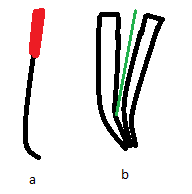
You can apply apical force with a file, there is minimal chance of fracture if you apply apical force only without rotation. You might bend the file in one itself but it probably won't break. It is when you start rotating as well that files separate. When there is a curve at the apex of a root canal, curve the file in the apical region (a) as if you enter with a straight file it will hit the outside of the canal curve and feel like a hard stop (b). If you curve the file you must have the curve facing the same way as in the canal (A radiograph will help) but to get a more precise feel you must apply apical force only, withdraw vertically, rotate slightly (Not locked into the canal) and reapply apical force. At a certain point in the rotation you will find a spot where the file progresses further than all the other positions. This means you have negotiated the curve. from then it is short vertical filing motions. If you pull too far out you may lose the location. Once the file is w...

Denture review

In a review appt for full dentures (especially immediate dentures- as they have more going on), if a patient presents with a sore spot, Always check the occlusion first before hacking away at the denture. If they have an occlusal interference or CR is incorrect, the patient may be causing a denture base shift in function which will require occlusal adjustment or remake rather than a denture intaglio adjustment.