Posts

Showing posts with the label restorative

Stainelss steel crowns

Image
 I have been doing more stainless steel crowns this year. In fact, prior to 3 months ago I hadn't done one at all. We learned about them briefly during the pediatric dentistry lectures at university and I attended a course on stainless steel crowns and pulpotomies at ADAQ as a new graduate. However I was always put off from doing them, partly because of my percieved complexity of the procedure as well as my stubbornness to change the way I do things. I thought that because I had more experience with doing composite resin fillings, that would be the way to go. Actually, I have always found appointments with kids quite intimidating. I have done a fair few fillings on kids over the years, some successful and I am sure a lot unsuccessful. When undertaking procedures that intimidate us, we tend to hesitate from going all the way with the procedure. Essentially this means that things aren't done properly. I was afraid to give local anaesthetic to kids, so I was afraid to prep the car...

Caries detector dye

Image
 I was going to make a post on caries detector dye because I find it to be such a useful aid during restorative procedures. Then I realised I had already made a post about in 2020. See below. https://dental-tidbits.blogspot.com/2020/09/a-note-on-caries-detector-dye.html  I pretty much agree with my thoughts on the previous post. At the time in 2020 I was using the dye fairly regularly as they had it at the public clinic I was at. I think my use dropped off as I transitioned to private practice and not every clinic I worked at had access to it. Now if I worked at a clinic without access to caries detector dye it would be something I would be requesting or purchasing myself.  Not that I need it to practice, no one needs it, but using it regularly will assist in consistency of your restorations. For proper adhesion to tooth structure, you must ensure that you are bonding to sound enamel and dentine. Therefore caries must be removed to an acceptable standard, clean margins ar...

Count your cords

Image
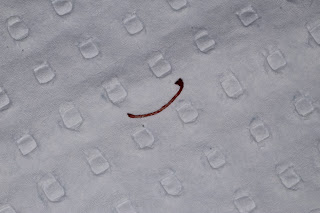
A couple of days ago I  left retraction cord in the gingiva of a patient for the first time. Of course it just happened to be my mother. Thankfully, when I put in cord retraction cord, I am very careful to count exactly how many go in and count how many come out. Unfortunately on that day, as hard as I searched, I just couldn't find the cord. It was a small, size 0 cord and was placed quite far under the gingival margin. A mistake I made was not cutting the cord long enough so ended up putting two different pieces to surround a single tooth. The problem was once I removed one piece, I forgot where the second piece started and finished. Rather than continue to dig around the gum, I finished whatever it is that I was doing, brought her back 2 days later and tried again. The gum was not visibly inflamed but the area of the gum that exhibited bleeding on probing was clearly the place where the cord was present. I probed around the gum and found the end of the cord and removed it. ...

Rubber dam tip for when it gets stuck on the tooth

Image
I have had multiple instances of rubber dam clamps getting stuck on the tooth as it is difficult to insert the tips of the forcep back into the  holes when it is time to remove the dam. The problem usually arises when the holes of the rubber dam clamp are angled towards each other which hinders penetration by the rubber dam forcep tips as the angled hole is not the same size as the forcep tip. I commonly see this on when the clamp is overstretched with the bending of the clamp bow changing the angle between the flat sides of the clamp. It is also more common in clamp designs that have the points of the clamp pointing downwards as the flat sides have a preexisting slope to them (Figure 1). Occasionally, teeth that have bulbous crowns and recession will have a clamp that sits more apically on the tooth, the clamp will be closed further and the contour of the tooth crown can hinder access of the forcep tips to the hole. One modification I have seen suggested is to grind back the later...